
Ancient Hindu Calendar Decoded: How Tithi, Nakshatra & Muhurat Actually Affect Your Daily Life
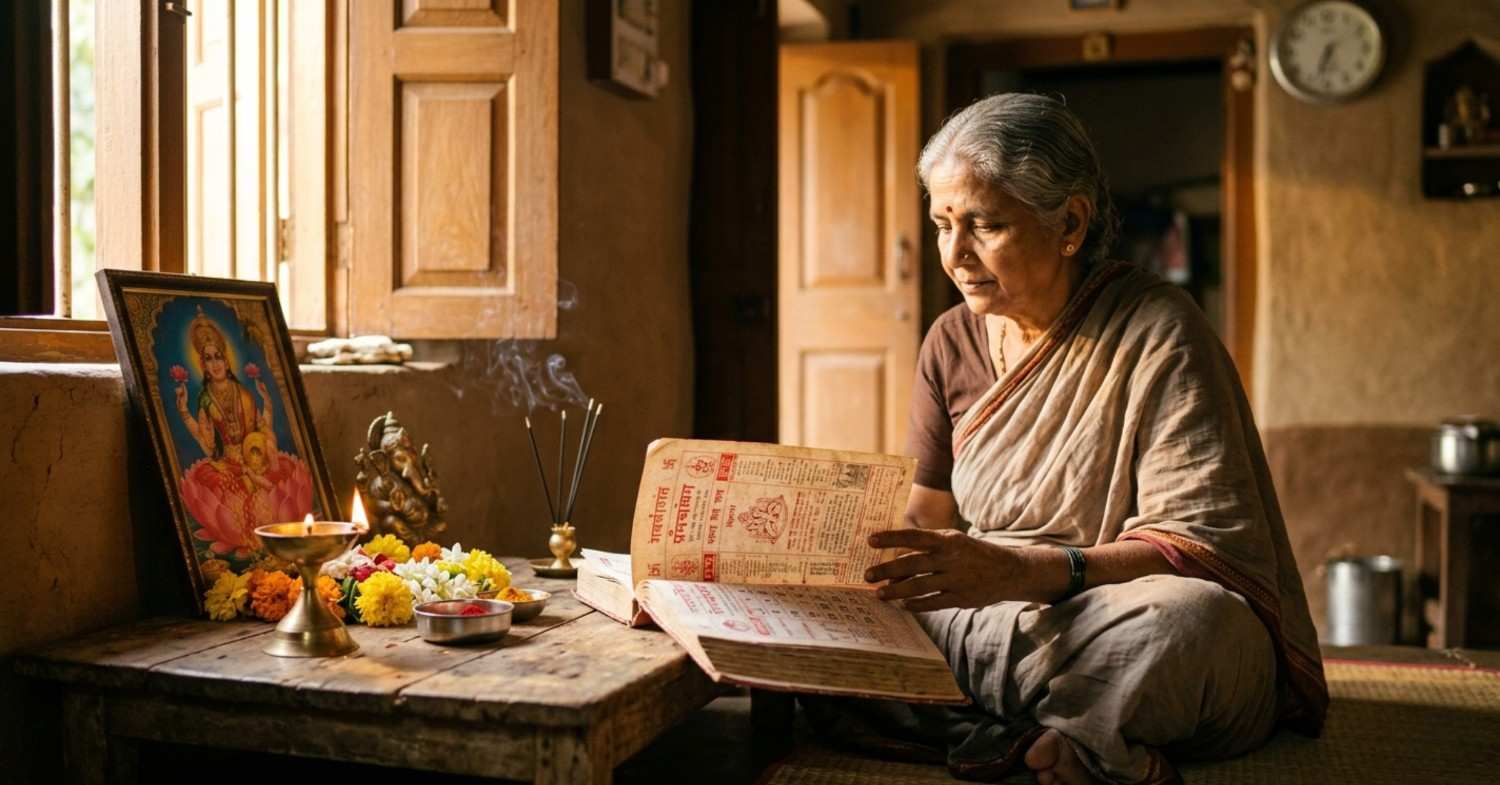
Ever wondered why some days just feel right while others don’t? The ancient Hindu calendar has been decoding this for centuries through Tithi, Nakshatra and Muhurat. Instead of just telling you the date, it reveals the quality of time, when to start something new, when to pause and when to align with natural rhythms. Rooted in lunar and cosmic movements, the Panchang adds a deeper layer of awareness to everyday decisions, from big life events to simple routines. It’s not about superstition, but about timing things wisely, working with the flow of time rather than against it, for smoother and more meaningful outcomes.
Have you ever noticed how some days carry an effortless quality, where decisions flow naturally, conversations land well and everything seems to move forward without resistance? And then there are days where even the simplest tasks feel like pushing against an invisible wall, no matter how organized or prepared you are.
The Hindu calendar has been mapping exactly these patterns for thousands of years.
Most people use the Gregorian calendar for daily logistics but instinctively turn to the Panchang when it genuinely matters: weddings, housewarmings, naming ceremonies, business launches and temple visits. That instinct is not superstition. It is the recognition, passed down through generations, that time is not neutral. Different moments carry different qualities, and aligning important actions with favorable cosmic conditions is simply intelligent planning.
The Panchang is one of the oldest and most sophisticated time-keeping systems in the world. The word itself carries its meaning in its roots: Pancha meaning five and Anga meaning limb, a five-limbed almanac where each limb measures a different dimension of cosmic time. Understanding Panchang basics does not mean replacing your Google Calendar. It means adding a layer of natural intelligence to how you time what matters most.
At the heart of this system are three elements that directly shape daily life: Tithi, Nakshatra and Muhurat. Here is what they actually mean and why they still matter.
A Lunisolar System Built on Cosmic Precision, Not Convention
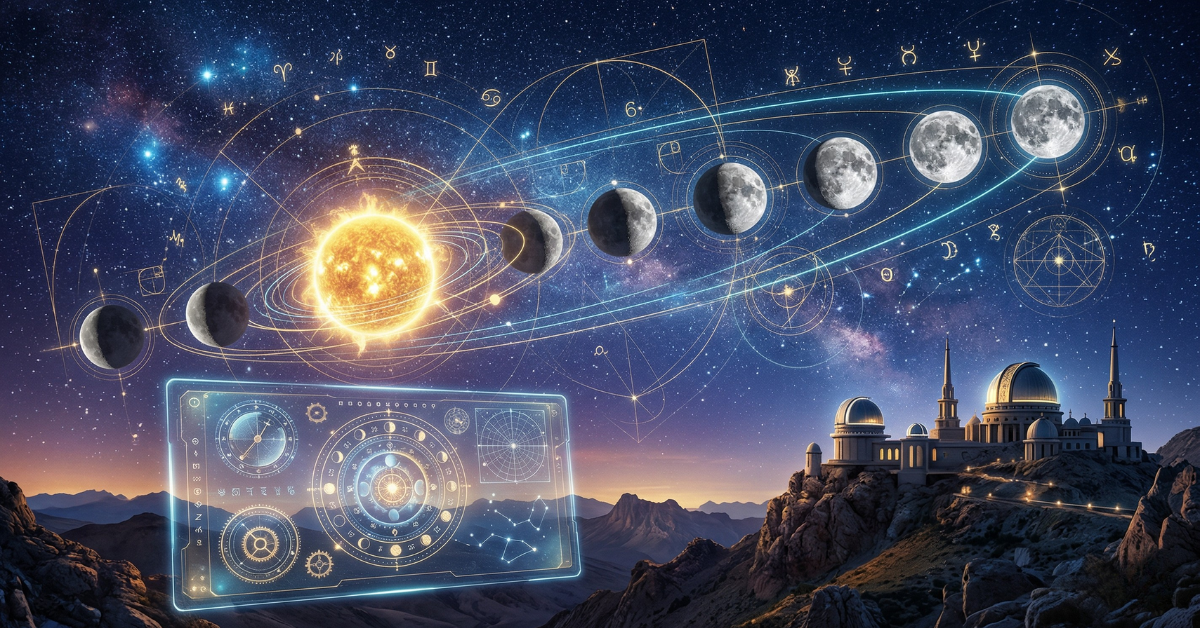
Before getting into the individual elements, it helps to understand what makes the Hindu calendar fundamentally different from the system most of the modern world uses daily.
The Gregorian calendar is purely solar. It tracks Earth’s orbit around the Sun, divides the year into twelve months of fixed lengths and exists primarily for administrative convenience. It tells you what date it is. It does not tell you anything about the quality of that date.
The Hindu calendar is lunisolar. Months follow the Moon’s orbit, each approximately 29.5 days long, while the year simultaneously accounts for the Sun’s position through the zodiac. This dual tracking ensures the calendar stays aligned with both seasonal cycles and lunar rhythms. Three calculation layers work together: the lunar cycle determines months, the solar position determines seasons, and the combined lunar-solar calculation determines tithis, nakshatras and muhurta.
The twelve Hindu lunar months in sequence are Chaitra, Vaishakha, Jyeshtha, Ashadha, Shravan, Bhadrapada, Ashwin, Kartik, Margashirsha, Pausha, Magha and Phalguna. Across India, two regional systems determine where a month begins and ends. The Amanta system, followed in South India, Gujarat and Maharashtra, ends each month on Amavasya (New Moon). The Purnimanta system, followed in North India, ends each month on Purnima (Full Moon). The Panchang calculations for tithis and nakshatras remain consistent across both systems despite the naming differences.
Because the lunar year is approximately eleven days shorter than the solar year, an extra month called Adhik Maas is inserted every 32 to 33 months to keep the two systems synchronized. Festivals are not observed during Adhik Maas. The Vikram Samvat, which uses the same Panchang principles but counts years from the era of King Vikramaditya, runs approximately 56 to 57 years ahead of the Gregorian calendar. Vikram Samvat 2083 corresponds roughly to Gregorian 2026 to 2027.
Tithi: The Lunar Day That Governs Festivals and Fasting
Why the Moon’s Position Determines When India Celebrates
Of the five Panchang elements, Tithi is the most fundamental and the one most directly connected to the rhythm of daily Hindu life.
A Tithi is not a calendar date. It is a measurement. Every time the Moon moves 12 degrees ahead of the Sun in ecliptic longitude, one Tithi is completed. There are 30 Tithis in a lunar month, divided into two fortnights called Pakshas. Shukla Paksha runs from Amavasya to Purnima, the waxing phase. Krishna Paksha runs from Purnima back to Amavasya, the waning phase.
Because the Moon’s orbital speed varies, a Tithi can last anywhere from 19 to 26 hours, not a fixed 24-hour unit. This is why two Tithis sometimes appear on a single calendar date. What matters is the Tithi active at the time of the activity, not the one that started the day.
Tithis With Specific Spiritual Significance
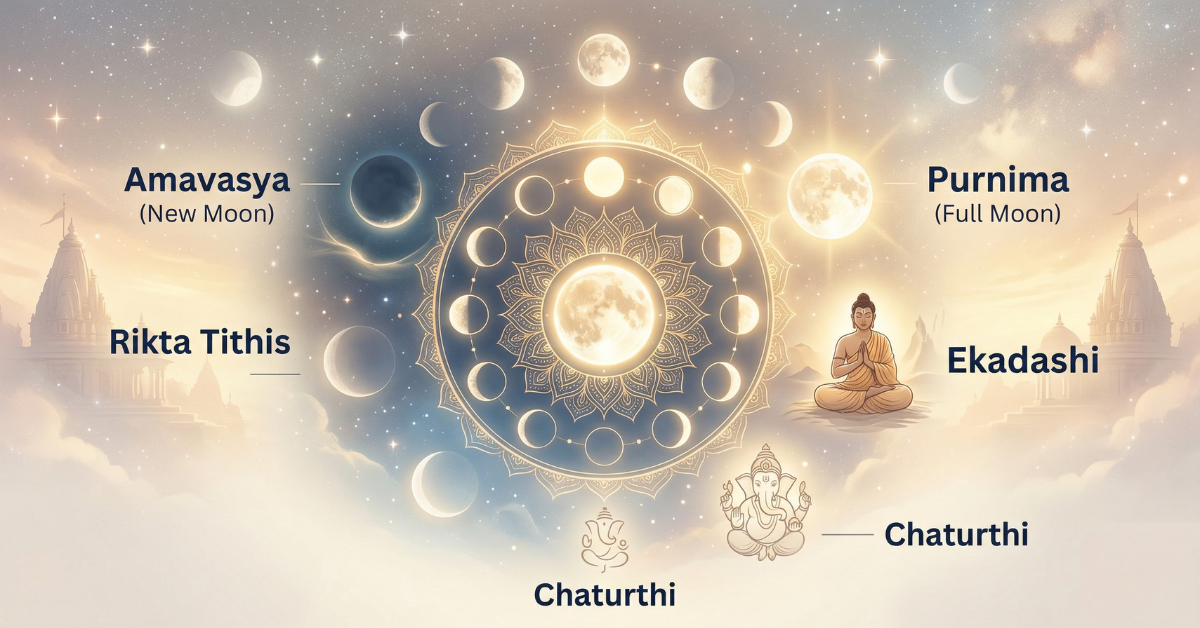
- Amavasya (New Moon) carries introspective energy and is traditionally used for ancestral rites and pitru karma.
- Purnima (Full Moon) is highly auspicious for charity, meditation and major festivals including Holi and Sharad Purnima.
- Ekadashi (11th Tithi in both Pakshas) is one of the most widely observed fasting days, particularly sacred in the Vaishnava tradition.
- Chaturthi (4th Tithi) is dedicated to Lord Ganesha and forms the basis for Sankashti Chaturthi, observed monthly for obstacle removal.
- Rikta Tithis (4th, 9th and 14th) are traditionally unfavorable for new ventures, better suited to completion, reflection and existing commitments.
How Tithis Shape the Festival Calendar
- Diwali falls on Kartik Amavasya.
- Holi falls on Phalguna Purnima.
- Navratri begins on Shukla Paksha Pratipada.
- Janmashtami falls on Bhadrapada Krishna Ashtami.
- Mahashivratri falls on Chaturdashi.
This is why Hindu festival dates shift on the Gregorian calendar each year while remaining astronomically consistent. They are tied to specific lunar conditions, not fixed Gregorian dates.
Practical Guidance From the Two Pakshas
Shukla Paksha, with the Moon growing in light, carries growth energy and is preferred for new ventures and expansion. Krishna Paksha, with the Moon diminishing, suits introspection, completing pending work and ancestral remembrance. Vedic tradition consistently aligns new beginnings with the waxing phase, reflecting a deep understanding of how lunar energy influences human psychology and decision making.
Nakshatra: The Moon's Position and the Energy of Your Day
How the Moon’s Star Position Shapes the Quality of Every Day
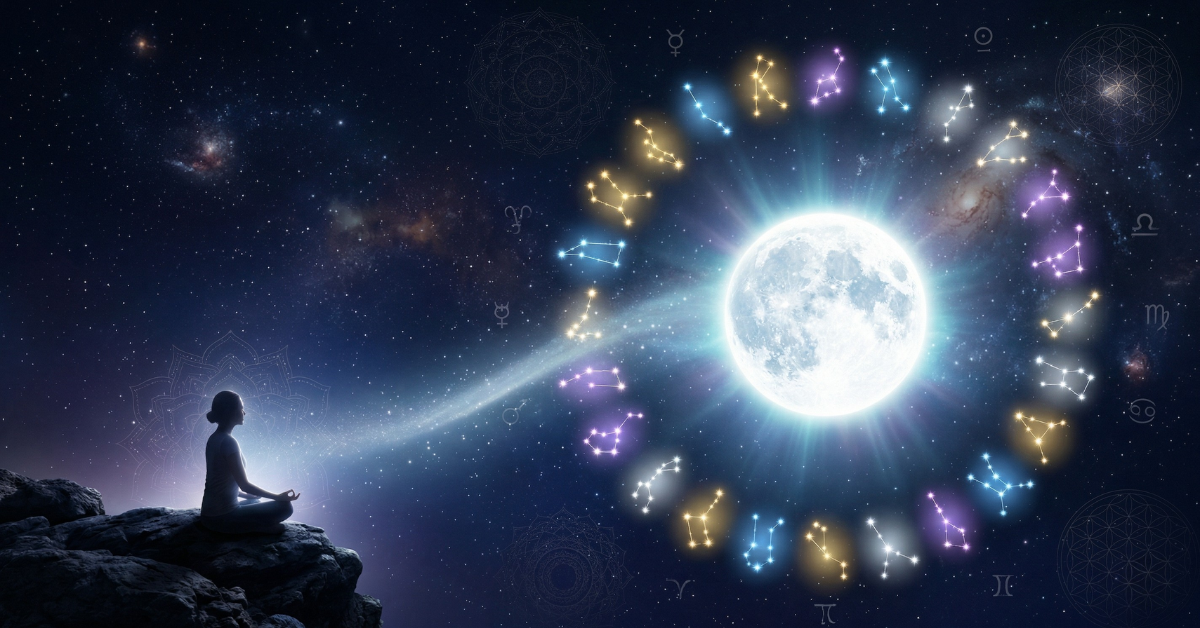
While Tithi tells you the Moon’s phase relative to the Sun, Nakshatra tells you the Moon’s absolute position in the sky. Together they give a far more complete picture of a day’s energy than either could provide alone.
The Nakshatra system divides the ecliptic into 27 equal segments of 13 degrees and 20 minutes each. The Moon spends approximately one day in each segment. The Nakshatra active at sunrise sets the dominant energy quality of that day, what the tradition describes as the cosmic conditions and style of the day.
The 27 Nakshatras in Order
Ashwini, Bharani, Krittika, Rohini, Mrigashira, Ardra, Punarvasu, Pushya, Ashlesha, Magha, Purva Phalguni, Uttara Phalguni, Hasta, Chitra, Swati, Vishakha, Anuradha, Jyeshtha, Mula, Purva Ashadha, Uttara Ashadha, Shravana, Dhanishta, Shatabhisha, Purva Bhadrapada, Uttara Bhadrapada and Revati. Each is governed by a specific deity and carries unique characteristics suited to different types of activities.
Key Nakshatras and Their Best Uses
- Pushya is considered among the best for business decisions and financial matters.
- Rohini is highly auspicious for new beginnings, marriage ceremonies and creative launches.
- Ashwini, governed by the divine physicians the Ashwini Kumaras, is ideal for starting health regimens and medical treatments.
- Krittika carries strong fire energy and suits challenging tasks requiring focused determination.
- Rohini, Uttara Phalguni and Uttara Ashadha are among the most favorable Nakshatras for marriage ceremonies in standard Muhurat tables.
The Janma Nakshatra
The most personally significant Nakshatra is the Janma Nakshatra, the birth star, the Nakshatra the Moon occupied at the exact moment of birth. It shapes personality, emotional tendencies and behavioral patterns in Vedic astrology and is used for selecting a child’s name, assessing marriage compatibility through Guna Milan and planning personal Muhurats.
How Nakshatra and Festival Timing Work Together
Krishna Janmashtami does not simply fall on Bhadrapada Krishna Ashtami. It requires both Tithi and the Moon being specifically in Rohini Nakshatra. When only the Tithi is present without the Nakshatra, the festival’s full astrological conditions are technically incomplete. This reflects Panchang’s layered approach: no single element gives the full picture.
Muhurat: Choosing the Right Moment for What Matters Most
The Ancient Art of Timing That Modern Science Is Beginning to Understand
If Tithi and Nakshatra tell you the quality of a day, Muhurat tells you the best specific window within that day to act.
A Muhurat is the selection of a favorable moment to initiate an action, calculated from all five Panchang elements: Tithi, Nakshatra, Yoga, Karana and Vaar. One Muhurat unit spans approximately 48 minutes. Acting during a favorable Muhurat means aligning personal intention with cosmic support, reducing resistance and strengthening outcomes through the practical wisdom of timing.
Yoga: The Third Panchang Element
Calculated from the combined longitudes of the Sun and Moon divided by 13°20′, there are 27 Yogas ranging from Vishkambha to Vaidhriti.
- Most auspicious: Siddhi (favorable for accomplishments), Amrita (the most auspicious, literally meaning nectar) and Shubha (positive for all activities).
- Most inauspicious: Vyatipata and Vaidhriti, both avoided for any important beginning.
A favorable Tithi and Nakshatra can be undermined if an inauspicious Yoga overlaps the planned Muhurat.
Karana: The Fourth Element
Karana is half a Tithi, spanning just 6 degrees of the Sun-Moon angle. It identifies short-term obstacles within an otherwise good day.
- Most auspicious: Bava and Balava.
- Avoided: Vishti, also called Bhadra, specifically for new work, travel and ceremonies. Traditional Panchang readers always verify Bhadra before confirming any Muhurat.
Vaar: The Fifth Element
Vaar brings the ruling planet’s energy into the calculation.
- Sunday: Sun’s energy, suited for leadership and authority.
- Monday: Moon’s energy, favoring emotional matters, creative work and family decisions.
- Tuesday: Mars energy, high intensity and good for courageous action.
- Wednesday: Mercury’s quality, excellent for communication, learning and negotiation.
- Thursday: Jupiter’s expansive energy, ideal for wisdom, education and spiritual practice.
- Friday: Venus energy, favorable for relationships and creative arts.
- Saturday: Saturn’s disciplined energy, best for long-term planning and service.
Inauspicious Periods to Avoid
- Rahu Kaal changes daily based on Vaar and is avoided for all new initiatives.
- Yamaganda and Gulika Kaal are additional negative windows checked before finalizing any ceremony.
- Bhadra is specifically verified before fixing important travel or rituals.
Practical Applications of Muhurat
- Marriage: Tithi, Nakshatra, Yoga, Vaar and both partners’ Janma Nakshatras verified together.
- Griha Pravesh: Housewarming ceremonies planned around favorable combinations.
- Business launches: Pushya Nakshatra in Shukla Paksha with Siddhi or Amrita Yoga is traditionally among the strongest combinations.
- Vehicle and property purchases: Timing the beginning to shape the quality of what follows.
How to Read the Panchang: Five Practical Steps
Using the Panchang in daily life does not require mastery of Vedic astrology. It requires a basic familiarity with the five elements and a willingness to check before committing to important timings.
Step 1: Start with the Vaar. The weekday determines the Rahu Kaal window and the Choghadiya sequence for the entire day. This is the first filter.
Step 2: Check the active Tithi and Paksha. If two Tithis are listed, the one active at the time of your planned activity is what applies. Note whether you are in Shukla or Krishna Paksha and whether the Tithi is one of the Rikta group.
Step 3: Check the Nakshatra. Match the active Nakshatra against standard Muhurat tables for your specific type of activity. Marriage, business, travel and medical procedures each have their own Nakshatra preferences.
Step 4: Verify Yoga and Karana. Confirm that no inauspicious Yoga like Vyatipata or Vaidhriti overlaps your planned window. Check that Bhadra Karana is not active during your ceremony or important departure.
Step 5: Check the inauspicious periods. Confirm your timing falls outside Rahu Kaal, Yamaganda and Gulika Kaal for your specific city. Panchang values vary by geographical location because sunrise and sunset times differ, which affects when these windows fall each day.
One important practical note: always use a city-specific Panchang. The Rahu Kaal for Mumbai and the Rahu Kaal for Delhi on the same day are different because sunrise times differ. Temple Dekho provides updated daily Panchang information specific to your location, making this accessible for every devotee without requiring specialist knowledge.
Conclusion
The Hindu calendar explained through its five elements is not a relic of a pre-modern world. It is a sophisticated astronomical and spiritual framework that has guided millions of people across millennia and continues to shape the rhythm of religious, cultural and daily life across India.
The Panchang does not replace modern planning. It deepens it. Tithi, Nakshatra and Muhurat are not constraints on what you can do or when you can do it. They are invitations to work with the natural currents of cosmic time rather than against them, to bring the intelligence of a 5,000-year-old observational system to bear on the decisions that matter most.
Time is not neutral. The Panchang simply helps you understand which currents are flowing with you and which ones to navigate with greater care.
Want to plan your next puja, ceremony or temple visit on the most auspicious day possible? Temple Dekho gives you daily Panchang data, Muhurat timings and festival dates so every sacred moment is timed with intention.
Frequently Asked Questions
1. What is the Hindu calendar explained simply for someone who has never used a Panchang?
The Hindu calendar is a lunisolar almanac that tracks both the Moon's orbit and the Sun's position. It measures time in Tithis (lunar days based on the Sun-Moon angle), Nakshatras (the Moon's constellation position) and Muhurats (favorable windows for specific actions). It is used across India for everything from festival timing to major life decisions, offering a layer of cosmic intelligence the purely solar Gregorian system does not provide.
2. Why do all three, Tithi, Nakshatra and Muhurat, need to be checked together?
Tithi tells you the Moon's phase and emotional quality of the day. Nakshatra tells you the Moon's position and dominant energy. Muhurat combines all five Panchang elements into a single favorable action window. A favorable Tithi can be weakened by an inauspicious Yoga. A good Nakshatra can be undermined by Bhadra Karana. All five elements work together as a complete system, not as independent checkboxes.
3. Why do Hindu festival dates change every year on the Gregorian calendar?
Hindu festivals are anchored to Tithis, not fixed Gregorian dates. Since lunar months are approximately 29.5 days, they do not align with fixed 30 or 31-day Gregorian months. The festival has not moved. The Gregorian window it falls into has simply shifted.
4. What Panchang basics should a beginner check before planning an important event?
Tithi: Choose Shukla Paksha and avoid Rikta Tithis.
Nakshatra: Match to your activity type using standard tables.
Yoga: Confirm no Vyatipata or Vaidhriti.
Karana: Avoid Bhadra or Vishti.
Vaar: Align with the ruling planet's energy.
Always check Rahu Kaal for your specific city as it changes daily. For major events, consulting a qualified Jyotishi provides the most complete Muhurat assessment.
5. Is the Panchang different in different parts of India?
Core calculations remain consistent across India. Regional differences exist in the month-naming system. South India, Gujarat and Maharashtra follow the Amanta system where months end on Amavasya. North India follows the Purnimanta system where months end on Purnima. Panchang values also vary by city because sunrise and sunset times differ geographically. Always use a location-specific Panchang for accurate daily data.
Share On
Please install and activate TablePress plugin to work this widget.