
Mahakaleshwar Jyotirlinga: History, Significance & Devotee Beliefs
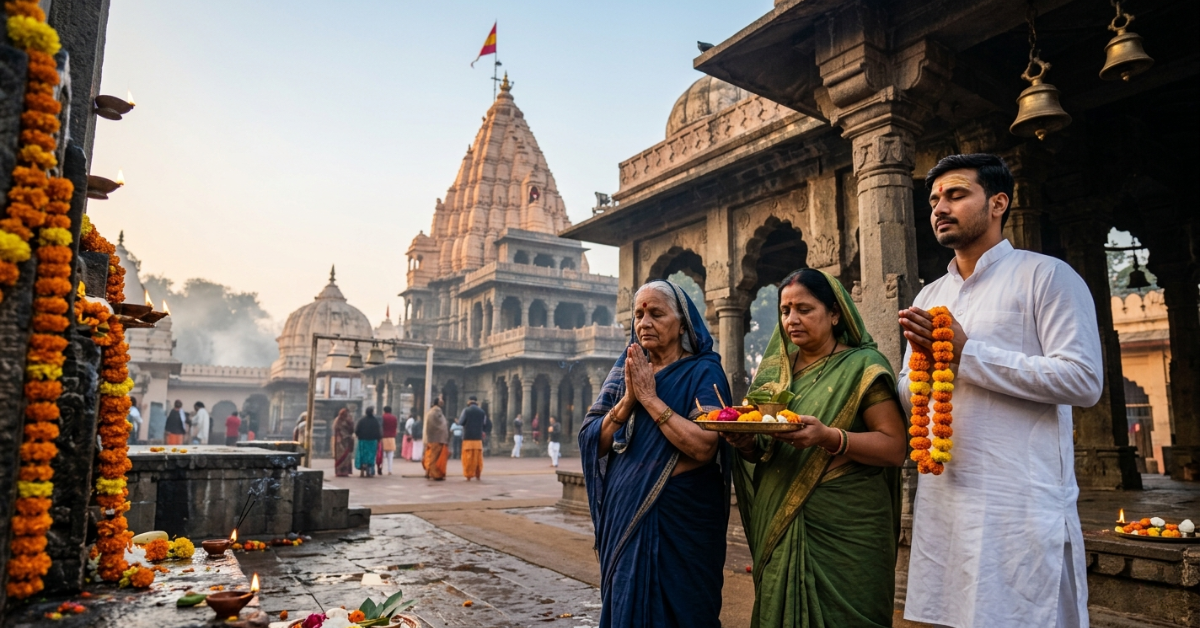
Mahakaleshwar Jyotirlinga in Ujjain is not just a temple, it is a living symbol of Lord Shiva’s supreme power over time and death. Located in Ujjain, one of the seven sacred cities of India known as the Sapta Puri, this shrine holds a place of deep reverence in Hindu tradition. Mahakaleshwar is one of the 12 Jyotirlingas of Lord Shiva, making it among the most spiritually powerful Shiva temples in the country. Every year, lakhs of devotees from across India and abroad visit Mahakal Temple Ujjain, drawn by its intense spiritual energy and ancient legends. The temple is especially famous for its daily Bhasma Aarti, performed before sunrise, a rare ritual found only here among all Jyotirlingas. For devotees who cannot travel to Ujjain, platforms like Temple Dekho now make it possible to connect with Mahakaleshwar through online puja and darshan, keeping faith alive beyond physical distance.
Understanding Mahakaleshwar Online Puja
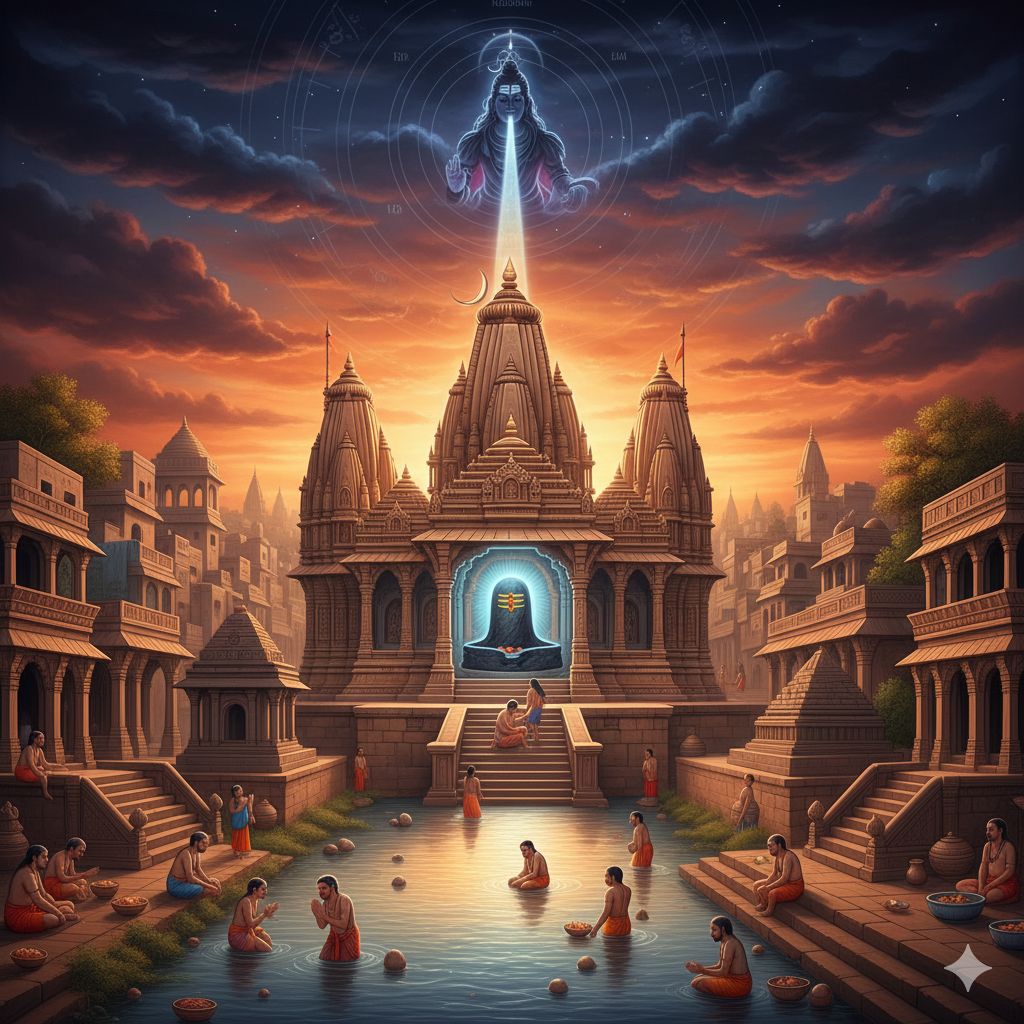
Mahakaleshwar is not just a famous temple. It is a place where time itself bows to Lord Shiva. Mahakal is experienced more than explained, and that is what makes this Jyotirlinga truly powerful.
1. What is Mahakaleshwar Jyotirlinga?
A Jyotirlinga represents Lord Shiva in the form of divine light, without beginning or end. Among the twelve Jyotirlingas, Mahakaleshwar stands apart because Shiva is worshipped here as Mahakal, the Lord of Time.
This Jyotirlinga is Swayambhu, meaning it manifested on its own and was not installed by human hands. That natural presence gives Mahakaleshwar a deep, raw spiritual energy. Another rare feature is that the lingam faces south. In spiritual tradition, this shows Shiva as a powerful protector who guards devotees from fear, negativity, and untimely danger.
2. Where is Mahakal Temple Ujjain Located?
Mahakal Temple is located in Ujjain, one of the seven most sacred cities of India, near the holy Shipra River. The city has been a spiritual center for thousands of years, known for learning, devotion, and ancient rituals.
Ujjain also holds a strong connection with time and astrology. In ancient India, time calculations were centered here. That is why Mahakaleshwar’s presence in Ujjain feels natural and meaningful. The Lord of Time resides where time itself was once measured.
A visit to Mahakal Temple Ujjain leaves devotees calmer, grounded, and more trusting of life’s rhythm.
Mahakaleshwar History: From Mythology to Medieval Times
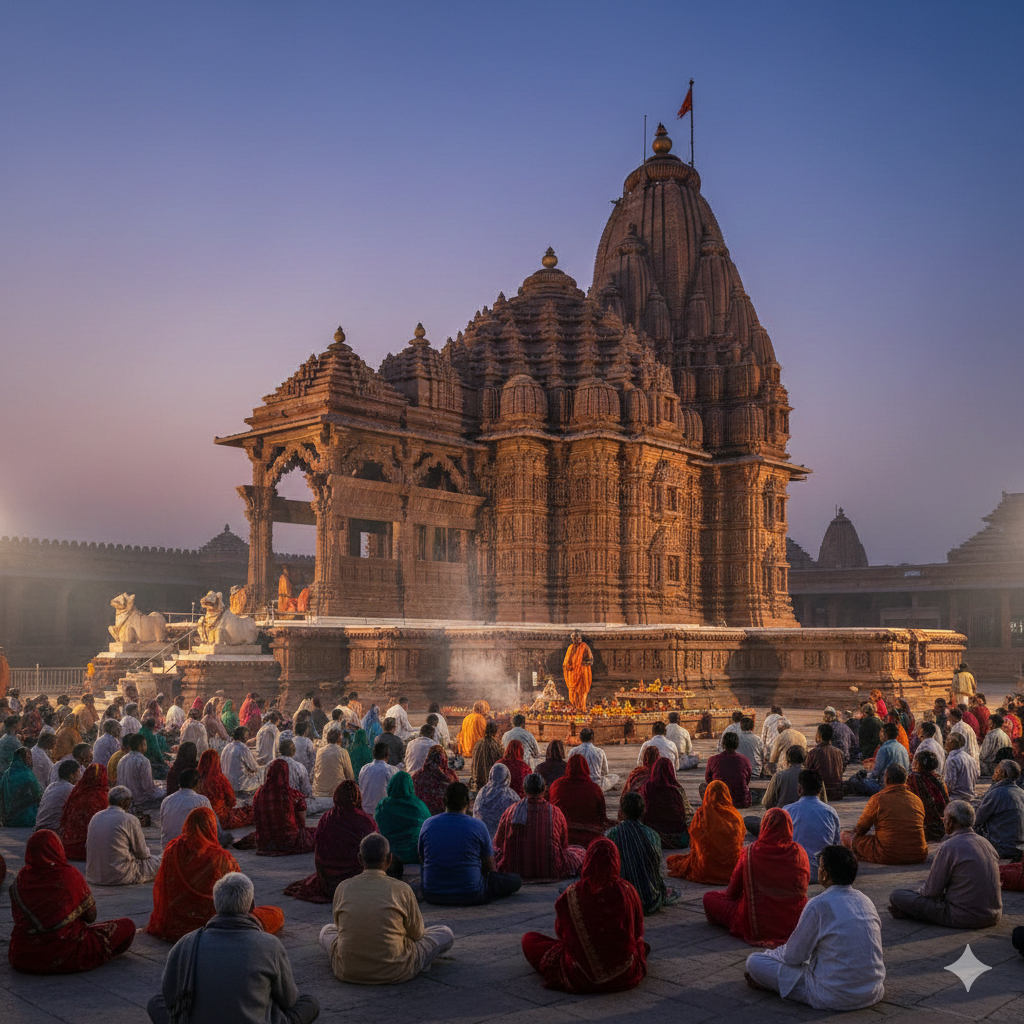
Mahakaleshwar’s history is not a straight line. It moves like time itself, appearing, disappearing, and returning stronger. Mythology, devotion, destruction, and revival are all woven into Mahakal’s journey.
1. Mythological Origins of Mahakaleshwar
Ancient legends speak of Ujjain being ruled by King Chandrasena, a devoted follower of Lord Shiva. Among the common people was a young boy named Shrikhar, whose innocent devotion was so intense that it disturbed dark forces. A demon named Dushan attacked the city, feeding on fear and chaos.
When prayers reached their peak, Shiva manifested instantly as Mahakal. This was not a gentle form. This was Shiva as the controller of time, destroying evil the moment it rose. The Jyotirlinga appeared right there, marking Mahakal as the eternal guardian of Ujjain. From that moment, Shiva here was worshipped not just as a god, but as the Lord who ends fear before it grows.
2. Role of Prajapati Brahma and Ancient References
Sacred tradition credits Prajapati Brahma with establishing the earliest shrine at this powerful spot. The place was already charged with divine energy, and rituals began to form around the self-manifested Jyotirlinga.
Mahakaleshwar finds clear mention in revered texts like the Shiv Puran and Skanda Puran. Local Sthalapuranam texts also describe Ujjain as Shiva’s chosen city, where Mahakal protects devotees through every age. These references confirm that Mahakaleshwar was never a local belief, but a pan-Indian sacred center known for centuries.
3. Destruction and Revival of Mahakal Temple Ujjain
The temple did not remain untouched by history. During the Paramara period, invasions caused damage, followed by careful reconstruction by devoted rulers who refused to let Mahakal fade.
The most severe blow came during the attack by Iltutmish in the 13th century. The temple was destroyed, and the Jyotirlinga was submerged in a nearby water body to protect it from desecration. Devotion, however, never disappeared.
Centuries later, Mahakal rose again. In the 18th century, Ranoji Shinde led the revival of Mahakal Temple Ujjain, restoring worship. Rani Ahilyabai Holkar further strengthened the temple’s spiritual and architectural presence. Since then, Mahakal has stood firm, reminding devotees that time may destroy structures, but faith always rebuilds them.
Architectural Grandeur of Mahakal Temple Ujjain
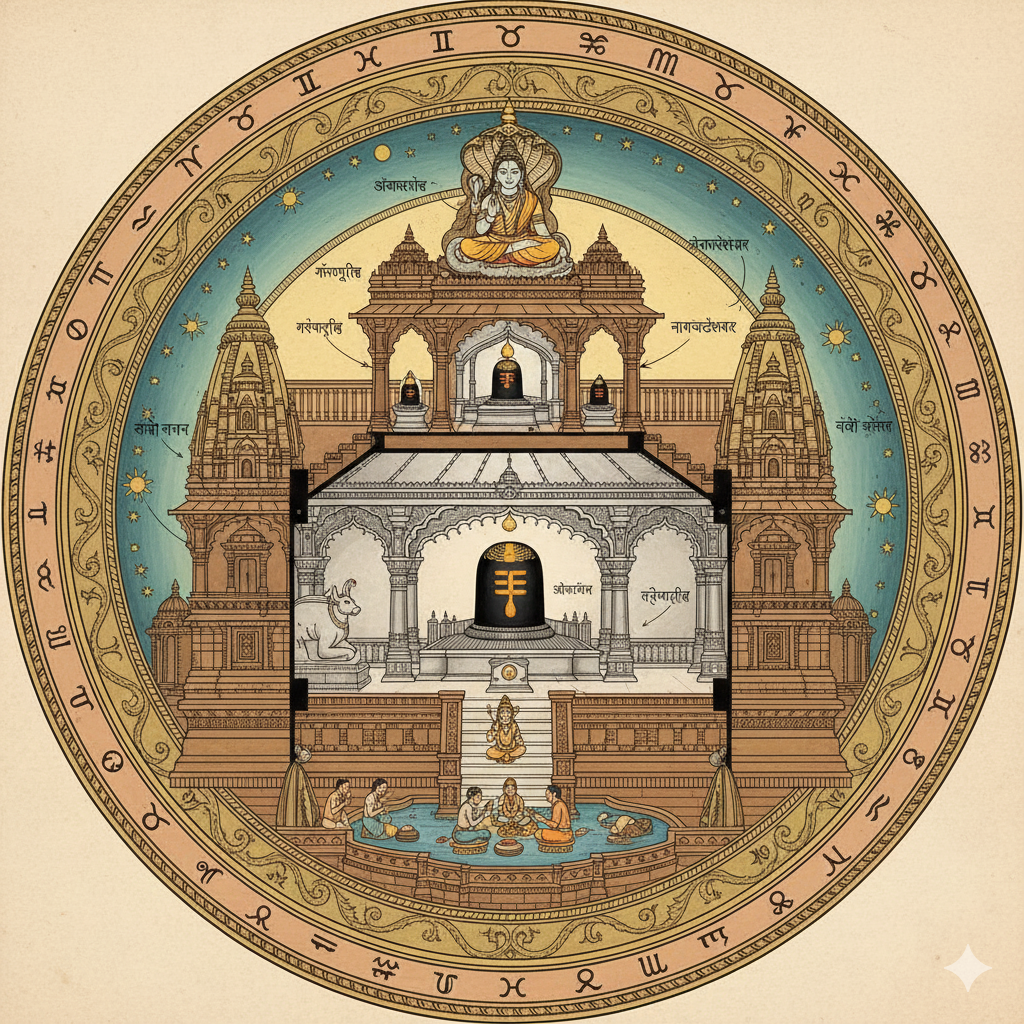
Mahakal Temple does not try to impress with decoration alone. Its beauty lies in strength, balance, and purpose. Every wall, step, and shrine has been shaped by devotion across centuries, not by a single ruler or style.
Architectural Styles Used
The temple reflects a graceful mix of Maratha, Chalukya, and Bhumija architecture. The Maratha influence brings solidity and simplicity, built to last rather than to show off. Chalukya elements add symmetry and sacred geometry, making the space feel calm and centered. Bhumija style gives the temple its vertical rhythm, guiding the eyes upward, just like devotion rising toward Shiva.
This blend feels natural, not forced. It suits Mahakal’s personality, powerful, grounded, and timeless.
Key Structures Inside the Temple Complex
The temple follows a five-storey layout, symbolizing the spiritual rise from the earthly to the divine. The Garbhgriha is simple and inward-focused, keeping all attention on the Jyotirlinga. The silver-plated roof above adds purity without distraction.
Above Mahakal lies the Omkareshwar shrine, creating a powerful vertical alignment that represents Shiva as both time and eternal sound. Nandi sits firmly facing Mahakal, teaching silent devotion and patience. Nearby, the Koti Teerth Kunda carries the quiet energy of centuries of worship.
Nagchandreshwar Temple
At the top stands the Nagchandreshwar shrine, opened only on Nag Panchami. On this day, Shiva is seen resting on Sheshnag. The once-a-year darshan reminds devotees that true blessings often come through patience and faith.
Mahakal Temple Ujjain stands not as a monument, but as a living space shaped by time, devotion, and trust.
Mahakal Significance in Hinduism
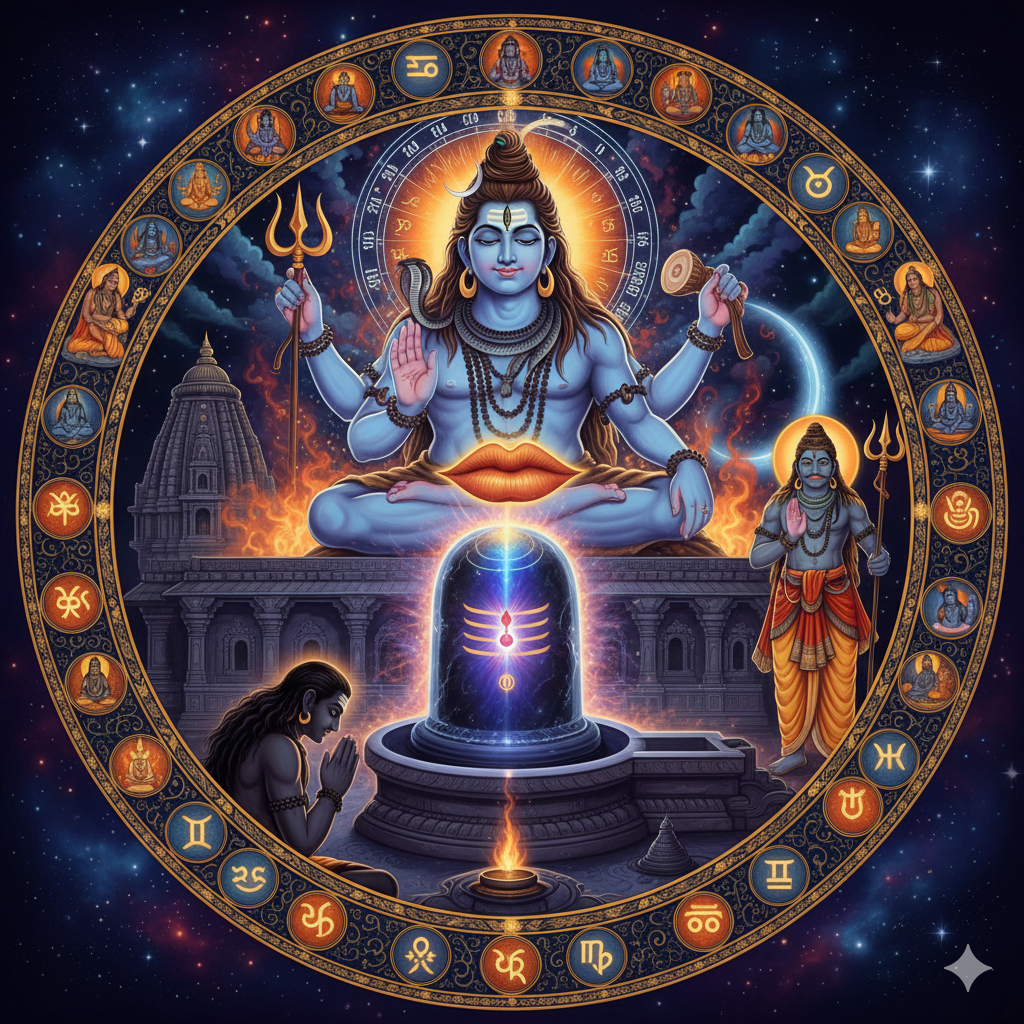
Mahakal is not worshipped out of fear, but out of deep trust. In Hindu belief, Mahakaleshwar represents protection, balance, and control over time itself. This is why devotion here feels intense yet reassuring.
Mahakaleshwar as One of the 12 Jyotirlingas
Among the twelve Jyotirlingas, Mahakaleshwar holds a unique place for Shaivites. Here, Shiva is not seen as a distant cosmic force but as a guardian who actively watches over his devotees. Worship at Mahakal is believed to cut through karmic burdens and bring stability during uncertain phases of life. That is why saints, householders, and seekers alike are drawn here.
Dakshinmukhi Jyotirlinga: Why South-Facing Matters
Mahakaleshwar is the only Jyotirlinga that faces south. Spiritually, the south is linked with Yama, the lord of death. Shiva facing this direction shows his dominance over death and fear. In tantric traditions, this orientation represents deep transformation and inner strength. Devotees believe that praying to a Dakshinmukhi Mahakal helps overcome fear, negativity, and the sense of being trapped by fate.
Mahakal as the Guardian of Time
Mahakal is Shiva as time itself, beyond past, present, and future. This form is closely linked with Kaala Bhairava, the fierce protector of sacred order. Ujjain’s identity strengthens this belief, as the city was once the ancient prime meridian of India where time was calculated. It feels natural that the Lord of Time chose this city as his seat.
Mahakaleshwar as a Shakti Peetha
Mahakaleshwar is also revered as a Shakti Peetha. Tradition holds that the upper lip of Goddess Sati fell here, making this land sacred to both Shiva and Shakti. This union gives the temple a rare balance of power and compassion. Devotees often feel that prayers here are not only heard, but gently guided toward the right outcome.
Mahakal’s significance lies in this balance. Fierce yet protective, timeless yet close, eternal yet deeply personal.
Rituals and Worship at Mahakal Temple Ujjain
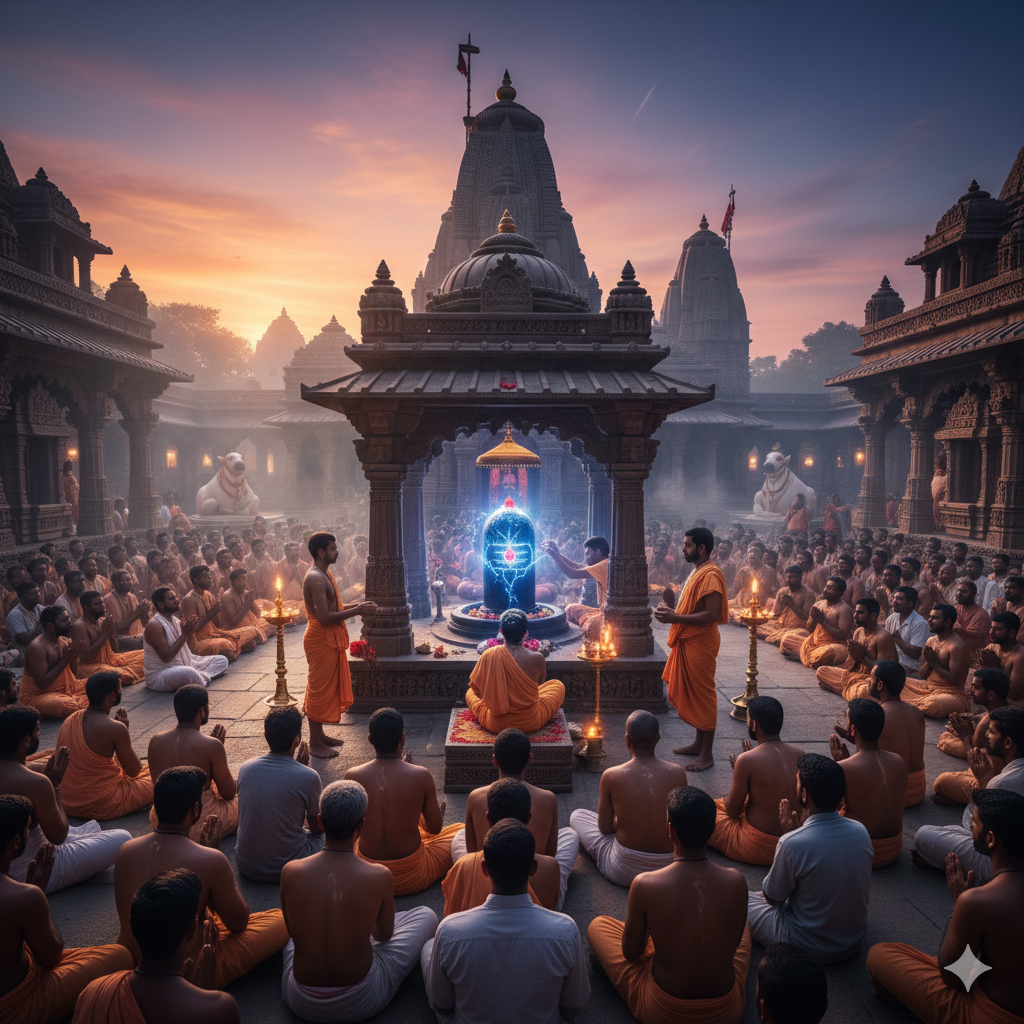
Worship at Mahakal Temple is not rushed. It flows with rhythm, discipline, and deep meaning. Every ritual here reminds devotees that Shiva is not only to be prayed to, but to be lived with awareness.
Bhasma Aarti: The Most Sacred Ritual
Bhasma Aarti is the heart of Mahakal worship and unlike any ritual performed at other Jyotirlingas. It takes place in the early hours before sunrise, when the world is still silent and the mind is most receptive.
During the ritual, sacred ash is offered to the Jyotirlinga. This ash symbolizes the truth of life. Everything that begins will one day turn to ash. Ego, fear, and attachment all burn away before Mahakal. That is why devotees feel a strange calm during this aarti. It reminds them that nothing truly belongs to time, except Mahakal himself.
What makes this ritual unique is its honesty. No ornament, no luxury, only ash and devotion. It shows Shiva in his raw form, beyond illusion.
Other Important Rituals
Nitya Yatra is the daily cycle of worship that keeps the temple’s spiritual energy alive from morning till night. Each offering is done with care, following traditions passed down for generations.
The Sawari procession takes Mahakal out into the city, reminding everyone that the Lord belongs not just inside the temple, but among the people. Streets fill with devotion, music, and joy during this sacred journey.
Mahashivratri is the grand celebration of Mahakal. On this night, the temple remains awake with chants, lamps, and endless faith. Devotees believe prayers offered then reach Mahakal without delay.
Performing Rituals Through Temple Dekho Online Puja
Not every devotee can travel to Ujjain, but devotion does not depend on distance. Temple Dekho online puja allows rituals to be performed on behalf of devotees with the same traditional care.
This service helps maintain a strong spiritual connection, especially for those living far away or facing health and time limitations. Through sincere intention and guided rituals, devotion continues, reminding devotees that Mahakal listens to the heart, not the location.
Devotee Beliefs Associated with Mahakaleshwar Jyotirlinga
Belief at Mahakal is not blind faith. It grows slowly, through experience, silence, and trust. Devotees often say Mahakal does not promise comfort, but he promises truth.
1. Moksha and Liberation from the Birth–Death Cycle
Mahakaleshwar is worshipped as the Lord who stands beyond time. Because of this, many believe that sincere devotion here helps loosen the grip of repeated birth and death. Prayers offered to Mahakal are seen as steps toward inner freedom, where fear of endings slowly disappears.
2. Protection from Untimely Death
Mahakal is known as the guardian against sudden and unnatural death. Devotees believe that surrendering to him brings protection during dangerous phases of life. This belief comes from Mahakal’s south-facing form, which symbolically keeps Yama, the god of death, under control.
3. Fulfillment of Wishes with Pure Devotion
At Mahakal, wishes are not demanded, they are offered. It is believed that when devotion is honest and ego-free, Mahakal responds in the right way and at the right time. Many devotees feel their wishes are fulfilled not exactly as asked, but as needed.
4. Removal of Negativity and Fear
Mahakal’s presence is said to burn negativity just like fire reduces everything to ash. Devotees often speak of fear fading after prayer here. Anxiety, restlessness, and inner heaviness feel lighter, replaced by calm acceptance and courage.
5. Beliefs of Sadhus and Tantric Practitioners
For sadhus and tantric seekers, Mahakal is a living force. Ujjain is considered a powerful ground for deep spiritual practices, especially those related to time, transformation, and detachment. These practitioners believe Mahakal tests devotion first, then grants strength, clarity, and inner mastery.
At Mahakaleshwar, belief is not about miracles alone. It is about becoming fearless in the face of time itself.
Why Visit or Worship Mahakaleshwar Jyotirlinga Through Temple Dekho
Devotion should feel peaceful, not stressful. Whether visiting Mahakal in person or worshipping from afar, the experience should stay focused on faith, not logistics.
Temple Dekho makes planning a Mahakaleshwar darshan simple and organized. From clear guidance to smoother scheduling, it helps devotees avoid confusion and spend more time in prayer and reflection instead of long planning struggles.
For those who cannot travel, Temple Dekho’s trusted online puja services offer a meaningful alternative. Rituals are performed with proper tradition and care, allowing devotees to participate with the same sincerity and intention. Distance no longer becomes a barrier to devotion.
Most importantly, Temple Dekho helps connect modern devotees with ancient traditions. In today’s fast-paced life, it keeps spiritual practices accessible while respecting age-old rituals. Mahakal’s blessings remain the same. Only the path to reach him becomes easier.
Conclusion
Mahakaleshwar Jyotirlinga stands as a timeless reminder that while everything in life changes, Mahakal remains constant. From ancient legends and sacred history to living rituals and deep-rooted beliefs, Mahakal’s presence has guided devotees through every age. His significance lies not only in scripture, but in the quiet strength and fearlessness felt by those who place their trust in him.
Whether experienced through a visit to Mahakal Temple Ujjain or through sincere worship via Temple Dekho online puja, devotion to Mahakal reaches beyond distance and time. What matters is the intent, the surrender, and the willingness to pause before the Lord of Time.
May every seeker who turns toward Mahakal find courage, clarity, and balance. When life feels uncertain, remember this. Time moves on, but Mahakal always stands still, watching, protecting, and guiding.
Feel Mahakal’s presence in your life. Visit Mahakal Temple Ujjain or offer your prayers through Temple Dekho online puja.
Connect with Mahakal, the eternal Lord of Time, and walk forward with faith. 🕉️
FAQs: Mahakaleshwar Jyotirlinga
1. Why is Mahakaleshwar Jyotirlinga so powerful?
Because it is Swayambhu, Dakshinmukhi, and worshipped as the Lord of Time.
2. What makes Mahakal Temple Ujjain different from other Jyotirlingas?
Its south-facing lingam and the unique Bhasma Aarti ritual.
3.Can devotees perform puja online for Mahakaleshwar?
Yes, devotees can book rituals through Temple Dekho online puja services.
4. What is the importance of Mahakal significance in astrology?
Ujjain is linked to ancient Indian timekeeping and Jyotish traditions.
5. Does worshipping Mahakaleshwar fulfill wishes?
Devotees believe sincere prayers at Mahakaleshwar Jyotirlinga remove obstacles and grant blessings.
Share On
Please install and activate TablePress plugin to work this widget.