
Mantra Science Explained: The Neuroscience and Vibration Behind Chanting Om, Gayatri & Mahamrityunjaya

Mantras aren’t just words you chant, they’re vibrations that reshape how you feel and think. From the calming resonance of Om to the clarity of the Gayatri Mantra and the healing depth of the Mahamrityunjaya, each sound works on your mind and body in powerful ways. Backed by both ancient wisdom and modern neuroscience, chanting can reduce stress, improve focus and create a deep sense of inner balance. It’s simple, accessible and deeply personal. Just a few minutes a day can shift your state from chaos to calm, helping you reconnect with yourself in a way that feels both grounding and transformative.
Long before neuroscience had a name for it, ancient India already knew something profound: sound is not just something you hear. It is something you become.
The word mantra itself carries this understanding in its very roots. Derived from the Sanskrit mann (mind) and tra (tool or protection), a mantra literally translates as an instrument of the mind. For thousands of years, these carefully constructed sound vibrations have been used across Indian traditions not merely as spiritual rituals but as precise psycho-physiological tools that harmonize the body, mind and consciousness simultaneously.
The Vedas proclaim that the universe itself emerged from sound vibration, with Om as the primordial seed of all creation. Modern quantum mechanics, remarkably, echoes this ancient understanding, describing the universe as made up of vibrating energy strings at its most fundamental level.
In today’s world, where stress, anxiety and fractured attention have become almost universal struggles, mantra chanting offers something rare: a timeless, natural solution that is now being validated by fMRI studies, clinical neuroscience research and brainwave analysis. Three mantras in particular, Om, Gayatri and Mahamrityunjaya, stand at the intersection of ancient wisdom and modern science in ways that deserve careful, honest attention.
What Happens Inside You When You Chant?
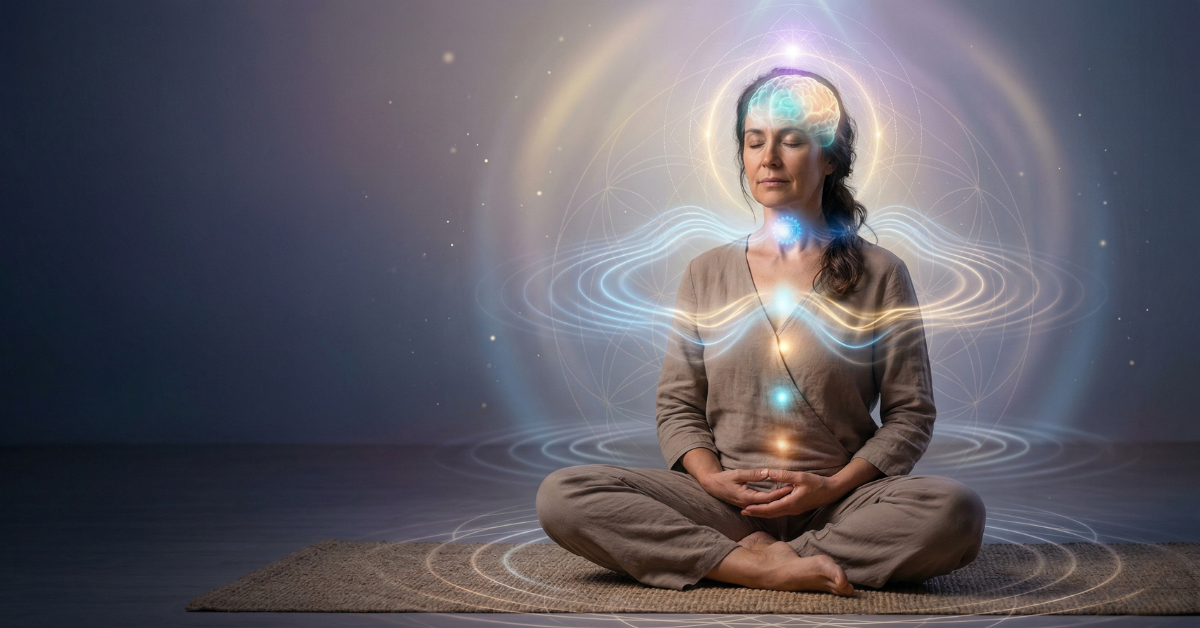
Before getting into the individual mantras, it helps to understand what mantra chanting actually does to the human system, because the effects are neither vague nor purely spiritual.
The ancient concept of Nada describes sound as the essence of all matter. Every form in existence vibrates at a certain frequency and produces a corresponding sound. The human body, being approximately 70 percent water, is extraordinarily responsive to sound frequencies. When you introduce the specific vibrations of a mantra into your system, you are not simply reciting words. You are initiating a measurable physiological and neurological shift.
Modern neuroscience has confirmed four key mechanisms through which this shift happens.
Brainwave alteration moves the brain from high-frequency beta waves, associated with active thinking, stress and anxiety, into slower alpha and theta waves linked to deep relaxation, creativity and meditative clarity. Vagus nerve stimulation, particularly through the prolonged “Mmm” sound in Om, triggers the parasympathetic nervous system’s “rest and digest” response, reducing blood pressure, heart rate and cortisol levels. Limbic system deactivation reduces activity in the amygdala, the brain’s fear and stress center, creating measurable emotional calm. Left-right brain synchronization improves focus, emotional stability and overall cognitive function through regular practice.
A 2011 fMRI study published in the International Journal of Yoga confirmed that Om chanting creates significant deactivation in limbic brain regions responsible for fear, stress and emotional reactivity. This is not anecdotal. It is documented, peer-reviewed science.
One more thing worth understanding here: Sanskrit is not an ordinary language. It is what linguists and ancient scholars describe as a discovered language, one where every sound has a specific corresponding form attached to it. Feed any sound into an oscilloscope and it produces a visible geometric form. Sanskrit was built on exactly this principle. This is why correct pronunciation matters far more than knowing the intellectual meaning when chanting mantras. The sound itself is the active agent.
Benefits of Chanting Om: The Primordial Sound
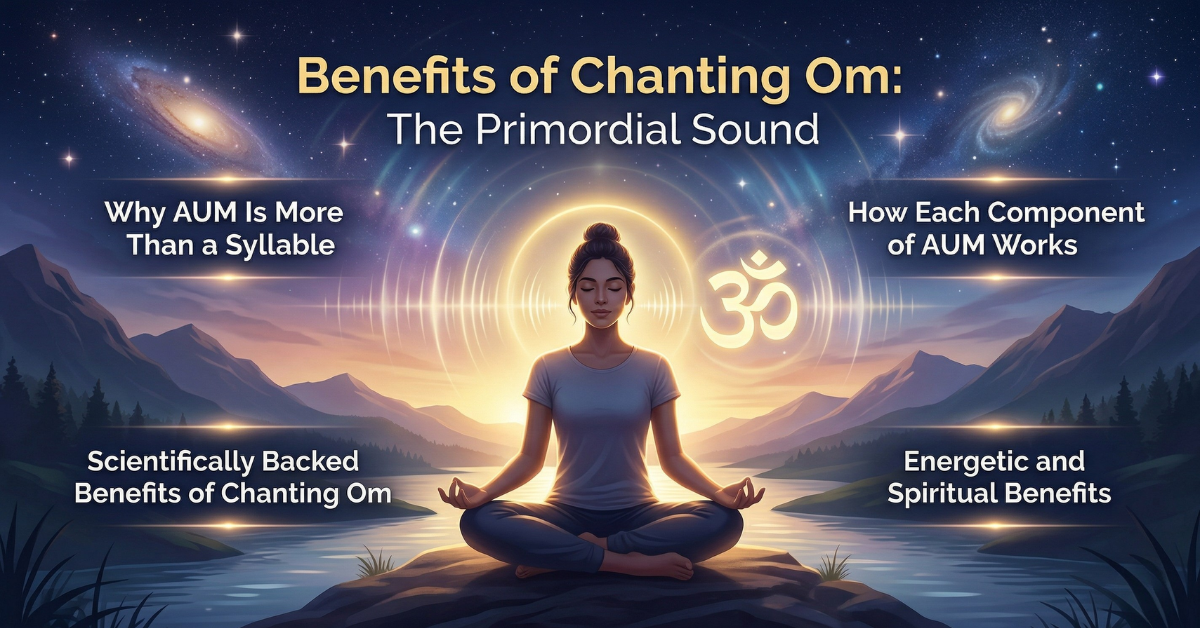
Why AUM Is More Than a Syllable
Of all the sounds in existence, AUM holds a unique position. Not a religious trademark, it is the fundamental sound the human voice produces without the tongue. There are only three sounds a person can make without the tongue at all: “aaa,” “ouuu” and “mmm.” Put them together and you get AUM. Every other sound in every language is simply a variation of these three.
This is not a philosophical claim. It is a verifiable acoustic reality.
How Each Component of AUM Works
- “A” originates deep in the throat and chest, stimulating lower neural pathways and grounding awareness in the physical body.
- “U” moves through the palate, engaging mid-brain regions linked to emotion and memory.
- “M” vibrates through the lips and skull into the prefrontal cortex, the brain’s center for decision-making, willpower and emotional regulation.
Spiritually, these three sounds correspond to the three states of consciousness: waking, dreaming and deep sleep. Physiologically, they represent a complete top-to-bottom activation of the nervous system followed by deep calm.
Scientifically Backed Benefits of Chanting Om
- Om vibrates at approximately 432 Hz, a frequency that stimulates the pineal gland and triggers a measurable relaxation response.
- The prolonged “Mmm” activates the parasympathetic nervous system, reducing cortisol, blood pressure and heart rate simultaneously.
- A 2011 MRI study confirmed limbic system deactivation during Om chanting, validating its role as a neurotherapeutic tool for anxiety, depression and stress.
- Just 10 minutes of daily Om chanting produces significant reductions in anxiety levels.
Energetic and Spiritual Benefits
- Clears blocked energy channels known as nādis, restoring the natural flow of prana through the body.
- Shifts the mind from fear and scarcity-based thinking toward openness and clarity.
- Creates the inner stillness that deeper awareness, meditation and spiritual growth require.
Gayatri Mantra Benefits: The Mother of the Vedas
24 Syllables That Science and Scripture Both Validate
The Gayatri Mantra is found in the Rig Veda at 3.62.10, making it one of the oldest documented prayers in human history. It is composed in the Gayatri meter, a stanza of three 8-syllable lines, giving it exactly 24 syllables in its original form.
“Om bhuh, bhuvah, swaha Tat savitur varenyam Bhargo devasya dhimahi Dhiyo yo nah prachodayat”
The first line, “Om Bhuh Bhuvah Swaha,” was added as an invocation before the original three Rig Vedic lines. It calls upon all three planes of existence simultaneously: Bhuh for Bhuloka, the earth plane; Bhuvah for Bhuva loka, the space between earth and sky; and Swaha for Swargalokam, the celestial plane. Before the prayer even properly begins, it is already invoking the entirety of existence.
The meaning at its core is a prayer for illumination: “May the divine light of Savitr illuminate my mind, cleanse me of all delusions, so that I can radiate that light outward.” Enlightenment, in this context, is simply an ever-increasing value of light in consciousness.
The mantra is personified by Gayatri Devi, the mother of the Vedas and bestower of knowledge, depicted with five heads and ten arms holding all the weapons of Vishnu. She represents omnipresence, mastery over all directions and the full spectrum of divine knowledge.
Now here is where the Gayatri mantra benefits become particularly remarkable from a scientific standpoint.
The specific combination of 24 syllables in the Gayatri Mantra produces frequencies of approximately 110,000 Hz. These frequencies directly stimulate the vagus nerve and enhance mental clarity and emotional regulation. Research shows that consistent chanting of the Gayatri Mantra for 90 days produces measurable increases in alpha and theta brainwaves, leading to improved memory, concentration and learning ability.
For students under academic pressure, working professionals experiencing cognitive fatigue or anyone dealing with mental overload, this is not a small thing. These are documented neurological improvements produced by a specific sound practice that costs nothing and requires no equipment beyond a quiet space and sincere intention.
On the spiritual side, the Gayatri Mantra purifies the nāḍis, strengthens the energetic field around the individual and brings the practitioner back to what the tradition calls Chitta, pure consciousness, the recognition that individual awareness is part of an interconnected whole.
Chanting it daily, even for a few minutes, opens pathways to inner peace and higher clarity that accumulate over time rather than diminishing.
Mahamrityunjaya Mantra Benefits: The Healer's Mantra
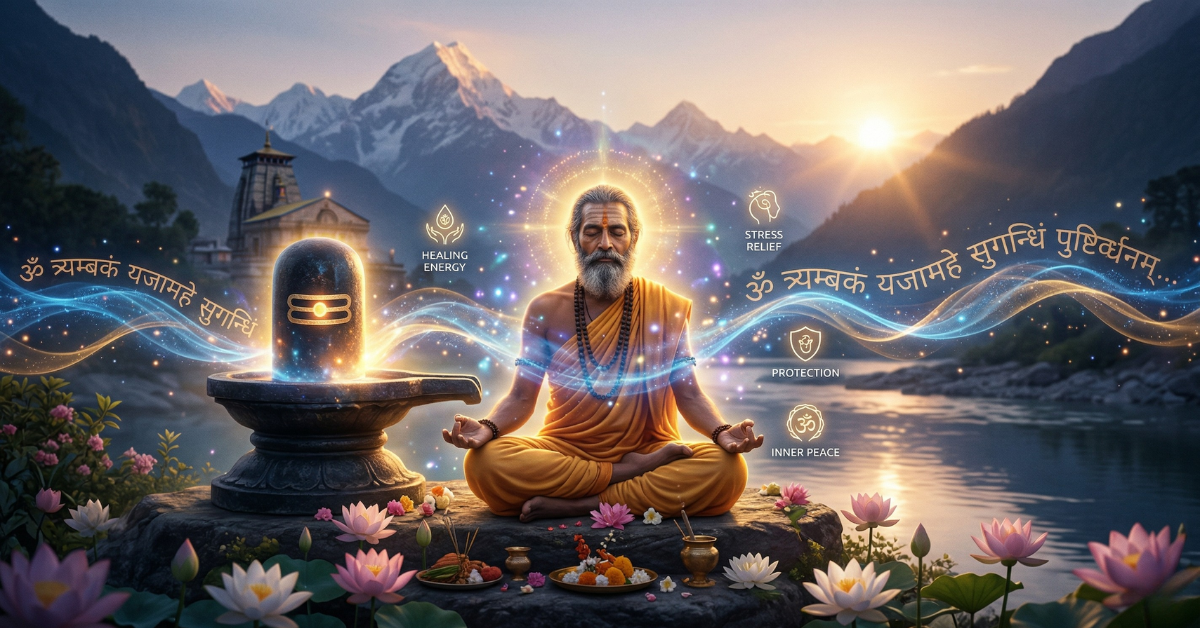
The Mantra That Addresses What Medicine Cannot Always Reach
The Mahamrityunjaya Mantra comes from the Rig Veda and is dedicated to Lord Shiva in his healing aspect. Its name translates as the Great Death-Conquering Mantra, but this requires careful understanding. It is not a prayer for physical immortality. It is a prayer for liberation from the deepest fear the human psyche carries: the fear of death, impermanence and loss of control.
That distinction matters enormously, because it explains why this mantra works at a psychological depth that simple relaxation techniques cannot reach.
The repetitive, rhythmic structure of the Mahamrityunjaya Mantra is deliberately designed. Each repetition does not simply reinforce a belief. It creates a sustained neurological engagement that gradually rewires the brain’s relationship with existential fear. Research has shown that chanting this mantra assists in reducing stress-related illnesses and regulates both the musculoskeletal and vasomotor systems, which directly impacts blood pressure management.
The autonomic nervous system, which governs the body’s involuntary stress responses, responds to this mantra with a depth of calm that goes beyond what breathing exercises alone can produce. For those dealing with chronic illness, deep grief, persistent anxiety or the kind of fear that sits beneath the surface of daily life, the Mahamrityunjaya mantra benefits operate at exactly the level where that fear lives.
Psychologically, the mantra fosters what the tradition describes as serenity and detachment from outcome. Not indifference, but the kind of deep, settled acceptance that allows a person to remain functional and clear-headed even in the most difficult circumstances.
In traditional practice, this mantra is approached with specific intention, a clean and quiet environment and ideally a Rudraksha Japa Mala, whose natural properties are considered particularly aligned with Shiva’s healing energy.
Starting Your Mantra Practice: Simple, Practical and Effective
Step | What to Do | Key Point |
1. Choose Your Mantra | Om for grounding, Gayatri for clarity, Mahamrityunjaya for healing | Match the mantra to your current need |
2. Set a Consistent Time | Early morning before sunrise or just before sleeping | Any fixed daily time builds momentum |
3. Prepare Your Space | Sit in a clean, quiet space facing east | Keep the spine upright and body relaxed |
4. Use a Japa Mala | 108 bead mala for keeping count | Focus on presence, not just the number |
5. Start Small | Begin with 5 to 10 minutes daily | Noticeable shifts appear within a week |
6. Pronunciation First | Chant slowly and accurately | Sound is the active agent in mantra science |
7. Chant With Intention | Keep a calm heart and gentle breath | Purity of intention matters more than speed |
Why the Same Mantra Produces Different Results in Different People?
This is a question worth addressing directly because it causes genuine confusion.
A mantra is not simply something you utter. It is something you strive to become. Without genuine awareness, repetition becomes mechanical and mechanical repetition produces dullness, not transformation. This is why the tradition emphasizes proper transmission, learning from a source with genuine understanding of what the sound does and why.
Mantra practice is described in classical texts as a subjective science. The same sound, chanted with different levels of awareness, sincerity and correct pronunciation, produces measurably different results. This is not mysticism. It is consistent with everything modern neuroscience understands about neuroplasticity: the brain responds to the quality of engagement, not just the quantity of repetitions.
The Japa Mala supports consistency and mindfulness, but what it cannot provide is the quality of presence that makes the practice genuinely transformative. That part is entirely up to the practitioner.
Conclusion
The science behind mantras and the spiritual tradition behind them are not in conflict. They are arriving at the same truth from entirely different directions. One uses fMRI machines and brainwave monitors. The other uses thousands of years of direct human experience. Both are pointing at something real.
The benefits of chanting Om, the cognitive and spiritual depth of Gayatri mantra benefits and the healing power embedded in Mahamrityunjaya mantra benefits are not reserved for the deeply religious or the spiritually advanced. They are available to anyone willing to approach the practice with consistency, correct pronunciation and genuine intention.
As the tradition puts it simply and beautifully: chant with love, chant with awareness, chant with a kind heart. Every sound uttered with sincerity moves you closer to peace, clarity and wholeness.
Your spiritual journey does not stop at a distance. Visit Temple Dekho to book an online puja, explore temple guides and receive divine blessings from home.
Frequently Asked Questions
1. How long before Om chanting shows real results?
Immediate effects like reduced heart rate, lower cortisol and a calmer mental state are noticeable within a single session. Deeper benefits include better sleep, improved emotional regulation and reduced anxiety built over weeks of consistent practice. The 2011 fMRI study confirmed measurable limbic deactivation even during short sessions, meaning the neurological response begins from day one.
2. What are the Gayatri Mantra benefits for students and professionals?
90 days of consistent chanting produces measurable increases in alpha and theta brainwaves, directly improving memory, concentration and learning ability. The 24 syllables stimulate the vagus nerve and enhance mental clarity. For anyone under academic pressure or cognitive fatigue, it requires no equipment, no cost and just a few minutes daily.
3. Can the Mahamrityunjaya Mantra support physical health too?
Yes. Research confirms it reduces stress-related illness, regulates the musculoskeletal and vasomotor systems and produces measurable improvements in blood pressure. Its effect on the autonomic nervous system goes deeper than standard relaxation techniques, making it particularly effective for chronic stress, illness recovery and deep-seated anxiety.
4. Does mantra chanting require knowing Sanskrit or the meaning?
The sound is the active agent, not the intellectual meaning. Correct pronunciation matters more than translation, which is why Sanskrit mantras have always been taught by rote. Knowing the meaning enriches the practice spiritually but does not replace acoustic accuracy.
5. Is mantra chanting only for Hindus?
Timings vary by season, festival calendars, and in Stambheshwar Mahadev's case, daily tides. Temple Dekho provides updated darshan timings and visitor guidance for sacred sites across India, making it a reliable starting point for pilgrimage planning.
Share On
Please install and activate TablePress plugin to work this widget.