
Hidden Temples in India: 10 Lesser-Known Sacred Shrines with Miraculous Stories
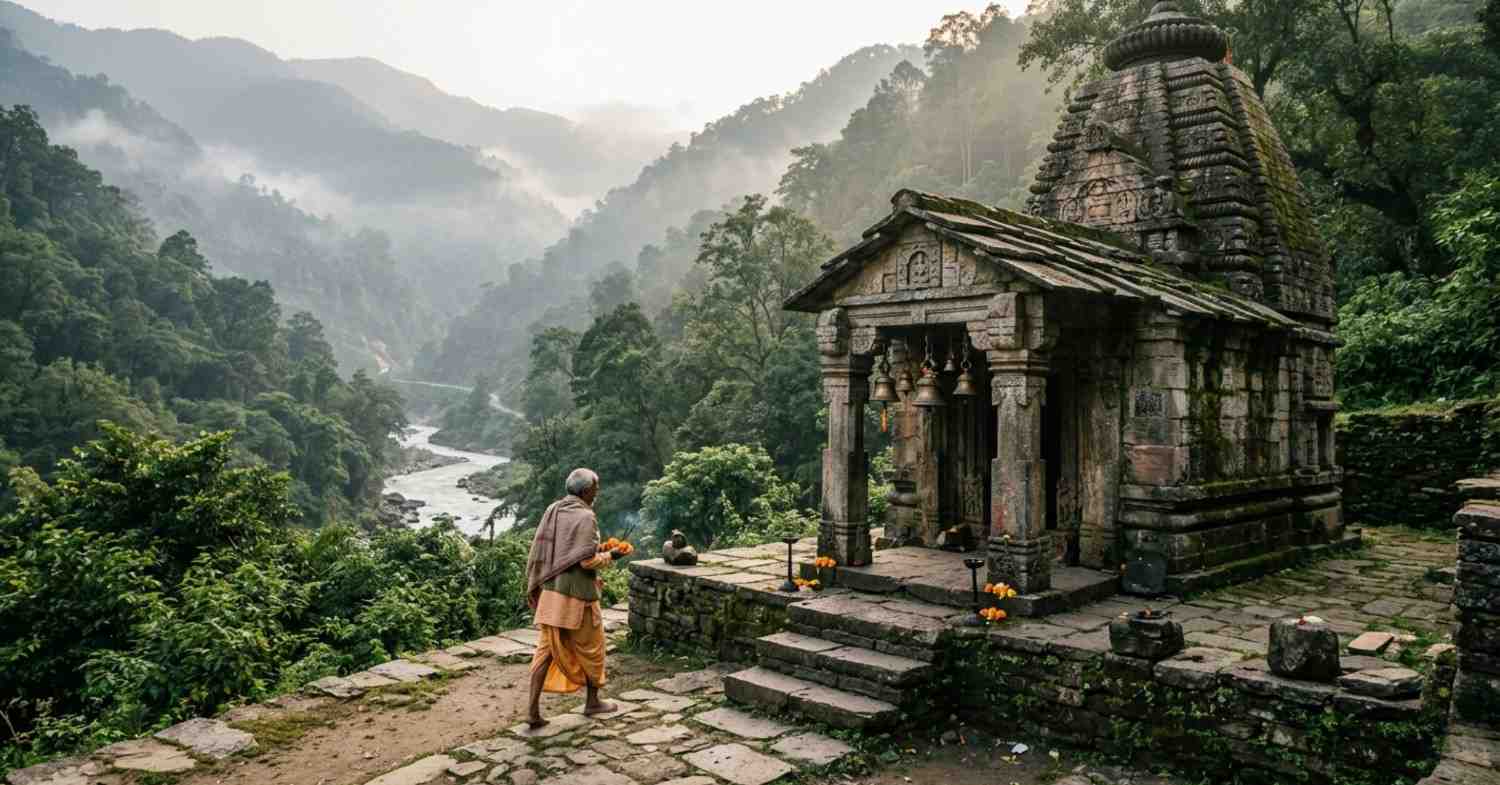
India’s most powerful temples aren’t always the most famous, they’re the ones quietly tucked away, carrying stories that feel almost unreal. From a Shiva temple swallowed by the sea each day to a flame that burns without fuel, these hidden shrines hold centuries of faith, mystery and devotion. Visiting them isn’t just about travel, it’s about experiencing something deeply personal and unfiltered. Away from crowds and noise, these sacred spaces offer a rare kind of connection, where belief feels alive and time slows down. Sometimes, the most profound spiritual moments aren’t found in grand places, but in the ones the world hasn’t fully discovered yet.
India has a way of hiding its most extraordinary things in plain sight. The temples that genuinely stop you mid-breath are rarely the ones with the longest queues or the brightest floodlights. They are the ones tucked into tidal shorelines, buried beneath the earth for centuries, standing inside remote Himalayan valleys or quietly guarding war stories that no military textbook fully captures.
While Varanasi, Tirupati and Dwarka hold their own undeniable sanctity, Sanatana Dharma’s living tradition breathes just as powerfully through the lesser known temples India has quietly preserved across generations. These shrines were consecrated by sages, discovered through divine signs, survived invasions and natural forces, and continue drawing devoted pilgrims who arrive not for the spectacle but for something far more personal.
This is not simply a travel list. It is an invitation to understand what makes these spiritual places in India genuinely extraordinary, not just visually, but in terms of the living faith and miraculous history they carry.
What Makes a Temple Truly Sacred?
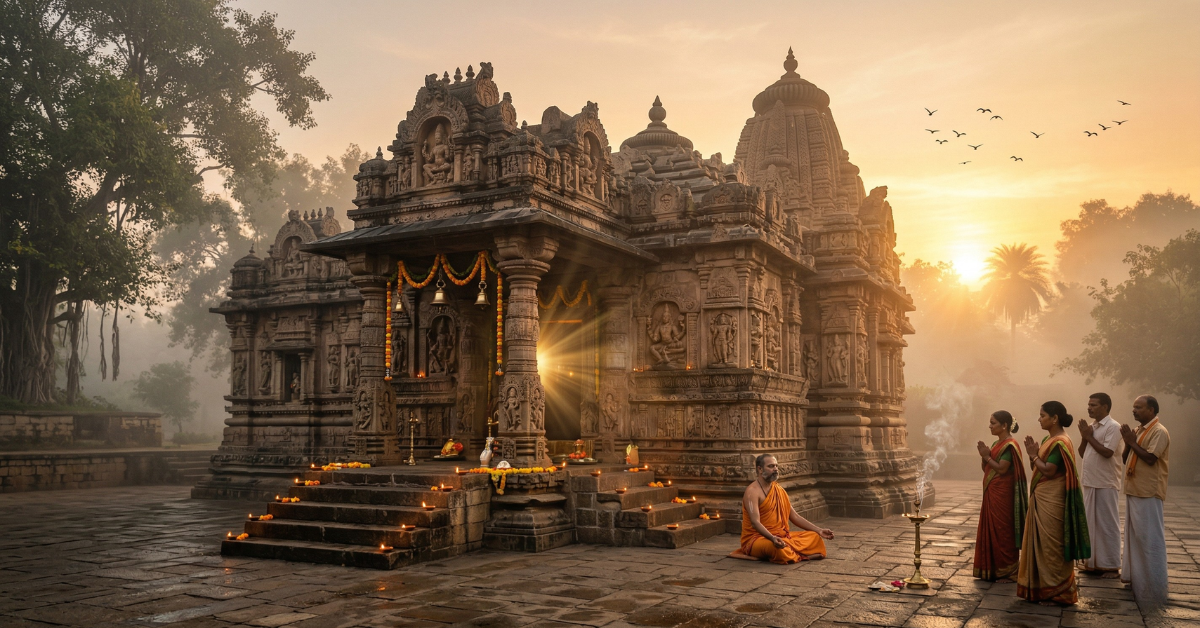
A temple’s power does not come from its size, its footfall or its prominence on a tourism map. According to the Agama Shastra, the ancient Hindu scripture governing temple construction and consecration, a temple becomes sacred through Prana Pratishtha, the ritual through which divine consciousness is formally invited to reside within the idol or Shivling. Once consecrated, that energy remains active, whether ten people visit or ten thousand.
Many of the hidden temples in India described here were consecrated by sages or revealed through divine signs to ordinary devotees across centuries. That makes their spiritual potency not lesser than famous pilgrimage sites but often far more concentrated, precisely because generations of quiet, sincere worship have not been diluted by noise and commerce.
A quieter temple also allows something rare in modern pilgrimage: genuine, unhurried darshan. The kind where you actually feel something shift inside.
The 10 Hidden Temples: Stories, Significance and What They Teach Us
1. Stambheshwar Mahadev Temple, Gujarat
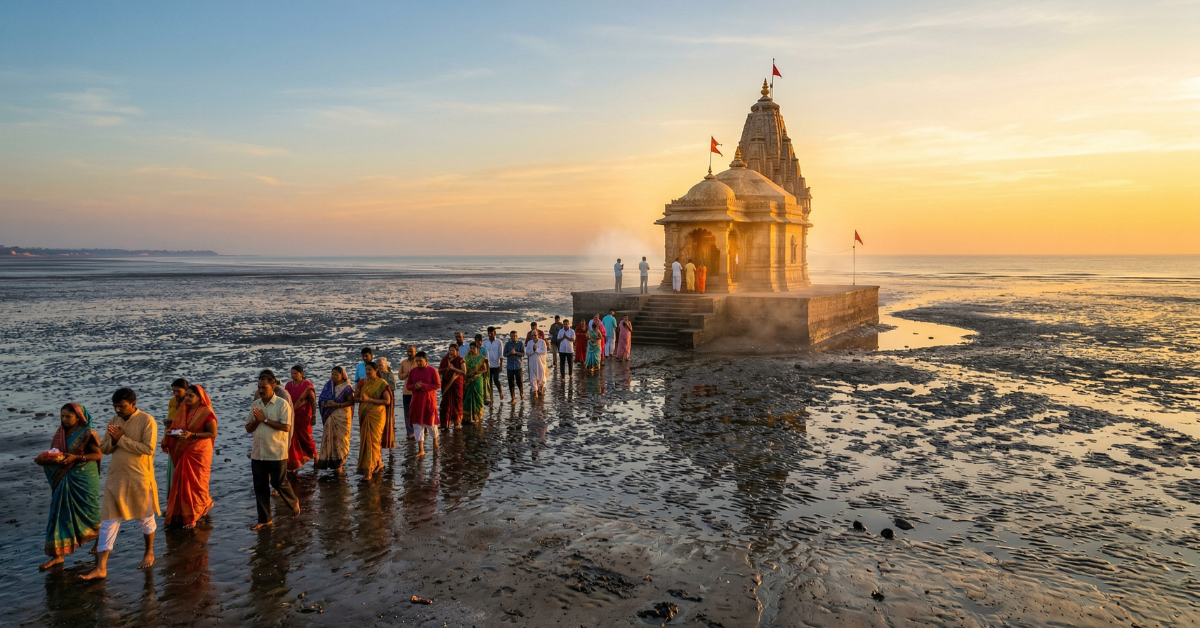
Twice every day, without fail, the Arabian Sea rises and swallows this Shiva temple whole. And twice every day, it retreats and gives it back. What looks like a straightforward tidal event carries a meaning that the Shiva Purana articulates clearly: the five elements themselves are forever in worship of Shiva. Water, the most fluid and formless of all elements, performs its own abhishekam here daily, without any human instruction.
The Shivling at Stambheshwar Mahadev stands on the seashore of Kavi Kamboy in Gujarat, and watching the tide withdraw to reveal the lingam rising from the water is an experience that belongs to a completely different category than ordinary temple visits. Check the tide timings before arriving. The darshan window is brief, but that brevity is precisely what makes it so arresting.
2. Nidhivan Temple, Vrindavan
There are places where the divine does not feel like history. Nidhivan is one of them. Tucked inside Vrindavan, this grove of twisted, hollow tulsi trees carries a belief that has never wavered across centuries: Lord Krishna comes here every night to perform the Raas Leela, and no living being may remain inside after sunset to witness it.
The trees themselves are considered transformed gopis, present in a different form but present nonetheless. The Bhagavata Purana speaks of Krishna’s Leela as eternal, not confined to a single historical moment, and Nidhivan is where that teaching stops being philosophical and starts feeling real.
Devotees report hearing faint sounds of anklets and music from outside the closed gates at night. Complete darshan before sunset. That is not superstition. It is respect for something far older and far larger than any individual visitor.
3. Tanot Mata Temple, Rajasthan
Few stories in India’s spiritual geography carry the weight that Tanot Mata does. Located 150 kilometres from Jaisalmer on the Indo-Pakistan border, this temple dedicated to Goddess Durga became the site of something no military strategy could account for. During the 1965 war, the Pakistan army repeatedly targeted this temple. None of the bombs exploded. The same happened in 1971.
The unexploded grenades and shells are not legend. They are kept inside the temple today, preserved as documented proof. The Devi Mahatmyam describes the goddess as the supreme protector of those who surrender to her with genuine faith. Tanot Mata does not just inspire that faith. She demonstrated it under conditions where everything was at stake.
The temple is managed by the Border Security Force, which gives the visit a structured, disciplined atmosphere unlike most pilgrimage sites. Arrive with reverence. The stories here are not mythology. They are recorded history.
4. Kakanmath Temple, Madhya Pradesh
In Sihoniya, Madhya Pradesh, stands an 11th century temple that should, by every conventional law of structural engineering, have collapsed long ago. The stones of Kakanmath are not mortared together in any standard sense, yet the temple stands tall, detailed in its carvings, intact after nine centuries. Local tradition says it was built overnight by spirits acting under divine instruction.
Whether one attributes that to miraculous construction or to the extraordinary precision of ancient Paramara era craftsmen, the result is the same: a structure that has outlasted every explanation offered for it. Visit at dawn when the light hits the stone correctly and the surrounding quiet makes the full scale of what you are looking at genuinely comprehensible.
5. Lepakshi Temple, Andhra Pradesh
A few hours from Bangalore, Lepakshi holds one of the most discussed architectural mysteries among lesser known temples India has preserved. Dedicated to Lord Veerabhadra, a fierce form of Shiva born from the grief following Sati’s death, this temple is a masterwork of Vijayanagara craftsmanship. Its walls carry murals and sculptures that read like living scripture, each panel connected to a specific mythological moment.
But it is one pillar among the seventy in the main hall that stops every visitor mid-step. It does not touch the ground. Devotees have passed cloths and paper beneath it for generations. No satisfying structural explanation has been offered for why it remains suspended. The Vishwakarma Purana’s tradition of divinely inspired architecture suggests that structures built in genuine devotion can transcend ordinary physical limitations.
Observe it with patience rather than rushing to photograph it from every angle. Sometimes the miracle simply asks you to be still.
6. Pataleshwar Mahadev Temple, Jaipur
When a Shivling is found buried 20 feet beneath the earth, undisturbed and intact, the Shiva Purana has a term for it: Swayambhu, meaning self-born and self-revealed. Pataleshwar Mahadev in Jaipur’s Jhalana Dungri area was excavated in 1977 after local residents persistently believed something sacred lay beneath the ground. They were right.
Today the temple sits inside a well-like enclosure with 20-foot walls. Nineteen stairs lead downward into a sanctum that feels genuinely removed from the world above. The descent is not just physical. The underground quiet achieves something that crowds and noise simply cannot. Take the stairs slowly.
7. Jwalamukhi Temple, Himachal Pradesh
In the Kangra district of Himachal Pradesh, a flame burns from a crack in natural rock. It has no wick. No oil. No visible fuel of any kind. It has been burning for as long as recorded history in this region reaches, and likely far longer.
The Devi Bhagavata Purana describes Shakti as primordial light that requires nothing external to sustain itself. It is believed that Goddess Sati’s tongue fell here, creating the eternal flame. Jwalamukhi is where that description becomes a physical reality you can stand in front of. Mughal Emperor Akbar, deeply unsettled by the flame, attempted to extinguish it. He failed. He later offered a gold umbrella to the goddess, an acknowledgment from one of history’s most powerful rulers that something here exceeded his authority entirely.
Navratri is the most charged time to visit, but even on an ordinary morning the flame’s quiet, unbroken persistence carries its own kind of sermon.
8. Bhuteshwar Nath Temple, Chhattisgarh
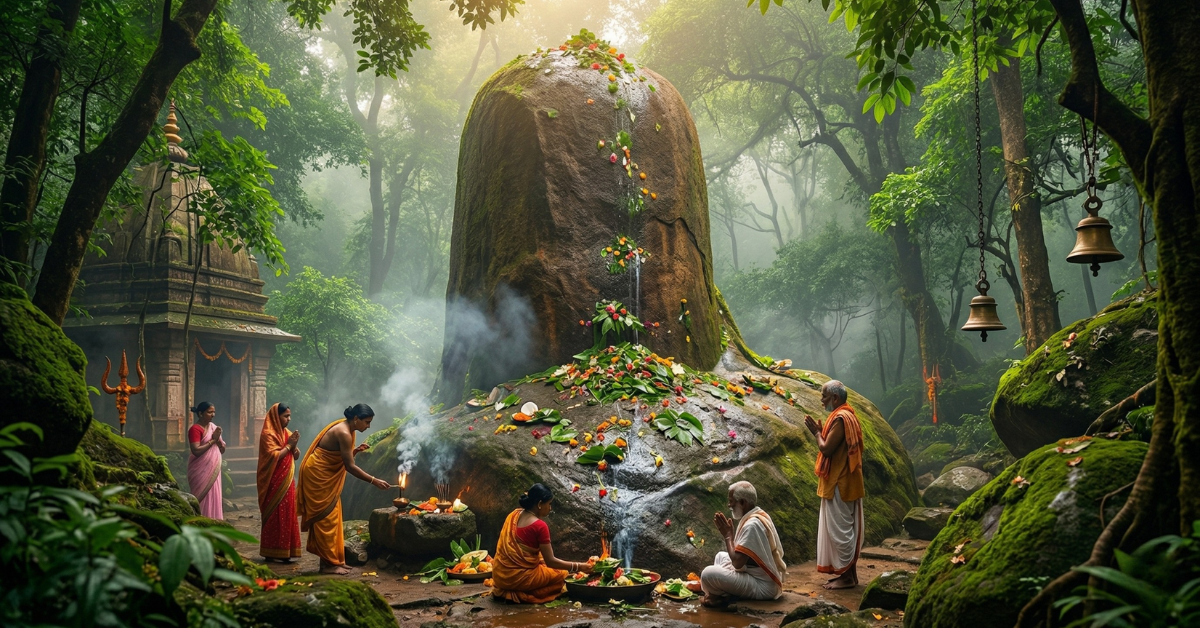
In the village of Marauda in Chhattisgarh, a Shivling grows. Not metaphorically. Physically. Devotees and local residents who have observed it across generations consistently report that the lingam increases in height by 6 to 8 inches every year. The story of its discovery adds another layer entirely: the landowner heard the sounds of a lion and a bull in an area where neither animal was present. When the ground was investigated, a mound in the form of a Shivling was found beneath the earth.
In Shaiva tradition, a self-revealing and self-growing Shivling is considered among the most spiritually potent forms of divine manifestation. Science has not provided a satisfying explanation for the annual growth. Regular devotees have not waited for one. Maha Shivratri draws the largest gathering, when the devotional energy in the surrounding forest becomes something you can almost physically feel.
9. Markula Devi Temple, Himachal Pradesh
Deep in the remote Lahaul Valley of Himachal Pradesh, accessible only between May and October, stands an 11th century wooden temple dedicated to Goddess Kali that quietly holds one of India’s most remarkable spiritual stories. Markula Devi is a place where Hindu and Buddhist traditions do not compete but genuinely coexist, visible in the iconography, the ritual atmosphere and the carvings that cover the temple’s wooden exterior.
The journey to reach it is part of the pilgrimage itself. The valley, the altitude and the relative isolation strip away the noise of ordinary life before you even arrive at the gates. The intricate woodwork here carries iconographic details that reward slow, attentive observation. This is one of the famous temples in India unexplored by most travelers precisely because reaching it requires genuine intention, not just curiosity.
10. Kamakhya Temple, Assam
Every June, the Kamakhya Temple on Nilachal Hill in Guwahati closes its doors for three days. The goddess is believed to be in her period of menstruation. The spring water within the temple turns red. Thousands of devotees and Tantric practitioners gather outside and wait.
This is one of the 51 Shakti Peethas, the sacred sites where parts of Sati’s yoni (womb) is believed to have fallen after Vishnu’s Sudarshana Chakra dismembered her to end Shiva’s grief. The Devi Bhagavata Purana describes Kamakhya as the seat of the goddess’s generative power, the source of creation itself.
What makes Kamakhya one of the most spiritually significant hidden temples in India is its honesty. It restores sacred dignity to something that centuries of social conditioning made shameful, celebrating the divine feminine in her most complete and unfiltered form. The temple reopens with powerful purification rituals, and that moment carries the freshest, most accessible energy of the entire year.
What to Keep in Mind Before You Visit
These are living spiritual places in India, not museum exhibits or photography locations. A few straightforward things make the difference between a visit and an actual pilgrimage.
Dress modestly and remove footwear before entering the temple premises. Observe silence inside sanctum areas, especially at places like Nidhivan and Pataleshwar Mahadev where the energy is particularly concentrated. If local customs are unfamiliar, offer simple and sincere prayer rather than attempting elaborate rituals without guidance. Support local priests, shopkeepers and artisans around these temples rather than large commercial vendors who have no connection to the place.
Most importantly, slow down. The greatest thing these lesser known temples offer is something increasingly rare: unhurried time in a sacred space. Do not rush through it.
Conclusion
India’s spiritual wealth has never been confined to the temples that appear on tourism brochures. It lives equally in a tidal shrine on a Gujarat shoreline, in an underground sanctum in Jaipur, in a Chhattisgarh forest where a Shivling quietly grows taller each year, and in a Vrindavan grove that closes its gates at sunset for reasons no one has ever needed to fully explain.
These hidden temples in India ask only one thing of the visitor: arrive with sincerity. Every shrine where a devotee prays with a genuine heart becomes a place of pilgrimage, regardless of how many people have heard of it.
Can’t Visit in Person? The Blessings Can Still Reach You
Not every devotee can travel to a remote forest in Chhattisgarh or time a visit to a tidal shrine in Gujarat. Distance, health, work, or family responsibilities get in the way, and that is completely understood.
That is exactly why Temple Dekho offers online puja booking, so you can have a puja performed at your chosen temple by a trusted priest, right from your home. The ritual is real, the intention is yours, and the divine blessing reaches you wherever you are.
Book your online puja at Temple Dekho today and carry the sanctity of these sacred spaces with you, no matter where life has you standing.
Frequently Asked Questions
1. What makes hidden temples in India different from popular pilgrimage sites spiritually?
The difference lies in atmosphere, not divine presence. Lesser known temples offer undisturbed darshan, deeper personal connection with the deity, and access to living traditions untouched by commercialization. Many were consecrated by sages or revealed through divine signs, giving them a spiritual depth that crowds at popular sites often obscure.
2. Are lesser known temples in India safe and accessible for solo travelers or families?
Most are accessible with basic planning. Tanot Mata Temple is managed by the BSF with structured visitor access. Markula Devi Temple is reachable only between May and October. Always check current conditions before visiting, especially for remote Himalayan destinations.
3. What is the best time to visit these spiritual places in India?
October to March suits most locations. For a richer experience, align visits with key festivals: Navratri for Jwalamukhi, Janmashtami or Holi for Nidhivan, Ambubachi Mela for Kamakhya, and Maha Shivratri for Bhuteshwar Nath. Stambheshwar Mahadev requires checking tide schedules year-round.
4. Do these temples follow the same rituals as mainstream temples?
Core Agamic rituals remain consistent, but unique local traditions exist. Nidhivan closes strictly after sunset. Kamakhya follows Tantric protocols during Ambubachi Mela that differ significantly from standard practice. Understanding these distinctions beforehand is part of visiting with genuine respect.
5. How can I find accurate darshan timings for these hidden temples?
Timings vary by season, festival calendars, and in Stambheshwar Mahadev's case, daily tides. Temple Dekho provides updated darshan timings and visitor guidance for sacred sites across India, making it a reliable starting point for pilgrimage planning.
Share On
Please install and activate TablePress plugin to work this widget.